


A Universal Necessity: The History of Toilets
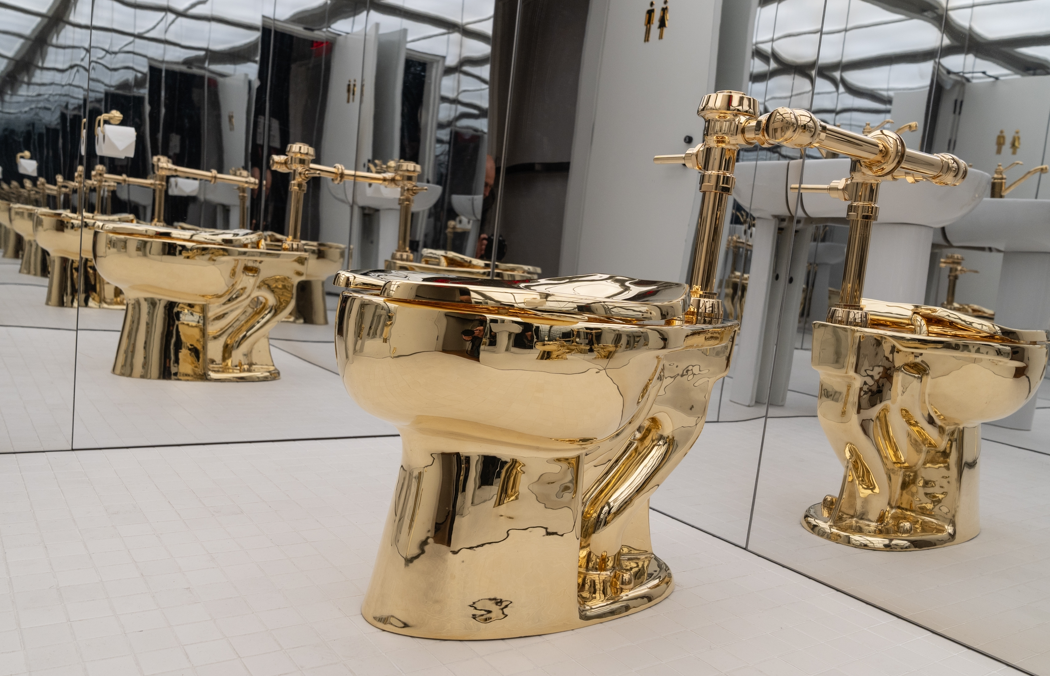
Few inventions have had a greater impact on civilization, or received less dinner-table discussion, than the toilet. From ancient drainage systems to gleaming smart fixtures, its history is a remarkable story of engineering, hygiene, water management and design. Along the way, toilets have helped reshape cities, conserve water and, quite literally, keep civilization from going down the drain.
By Eric Herman
It’s one of life’s simplest truths, one we all share but seldom discuss: everyone needs a toilet.
Whether made of gold in a palace or ceramic in a modest home, the toilet stands as one of humanity’s most transformative and essential inventions, a quiet, daily miracle that merges hygiene, engineering, and water management. In many ways, the toilet is the unsung foundation of public health and modern civilization. Yet, it’s also a device shaped by culture, technology, and design, evolving constantly to meet shifting human needs and environmental realities.
Ancient Sanitation
The history of the toilet runs parallel to the story of civilization itself. Archaeologists have found evidence of drainage and sanitation systems as early as 2500 BCE in the Indus Valley, where homes in cities like Mohenjo-Daro featured brick-built latrines connected to covered drains, arguably the first plumbing network. Around the same time, the Minoans on Crete engineered flushing toilets powered by running water, making them the earliest known example of a hydraulic flush system.
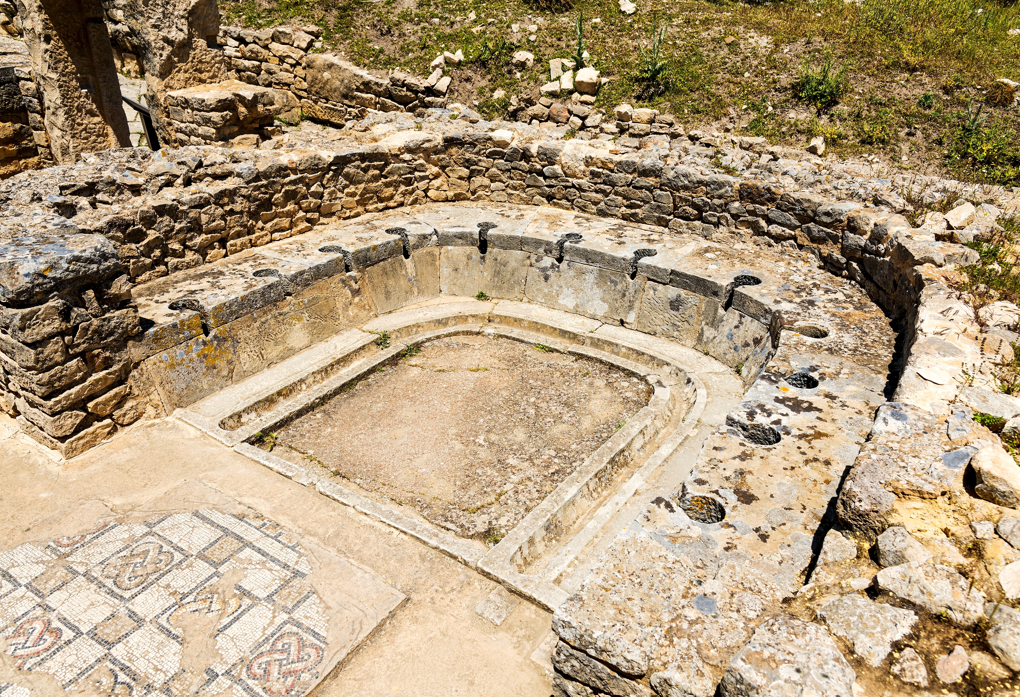 The ancient Romans took sanitation to civic heights. Their public latrines, long stone benches with keyhole-shaped openings, lined up over continuous streams of water that carried waste away into complex sewer networks like the famed Cloaca Maxima. Toilets were communal, social, and integrated into the architecture of empire. Water, as always, was central to the system.
Yet after Rome fell, sanitation regressed. In medieval Europe, chamber pots were the norm, emptied into streets or cesspits, and the stench of poor sanitation became part of urban life. The connection between waste, disease, and public health wouldn’t be scientifically understood until the 19th century.
The next major leap came during the Renaissance. In 1596, Sir John Harington, godson to Queen Elizabeth I, invented a device remarkably similar to the modern flush toilet — a raised bowl with a seat, water tank, and flush valve. The queen reportedly approved, but the design didn’t catch on.
It wasn’t until the Industrial Revolution that the toilet found its true momentum. Urbanization, population growth, and the rise of indoor plumbing created the demand, and necessity, for efficient waste management. In the late 18th and early 19th centuries, inventors like Alexander Cumming and Thomas Crapper refined the flushing mechanism and the S-trap, sealing out sewer gases while maintaining water flow.
By the mid-1800s, cities like London were forced to confront the deadly consequences of poor sanitation. The “Great Stink” of 1858, when the Thames became an open sewer, spurred massive infrastructure projects and innovations in sewer engineering. Toilets were no longer modern luxuries, but instead became instruments of survival.
Modern Movements
Toilet tech received a big boost in the advancements of Thomas Crapper (hence the term). Crapper was a late 19th-century plumber and businessman who helped popularize modern flush toilets. His contributions were practical, commercial, and influential in advancing sanitation technology.
Crapper did not invent the flush toilet (which as mentioned above, dates back to earlier figures like John Harington), but he refined and promoted it. His company installed high-quality, reliable flushing systems in homes and public spaces, helping make indoor plumbing more common.
He patented improvements to the ballcock, a valve that controls water flow into a toilet tank. This mechanism ensures the tank refills automatically after flushing and prevents overflow, still a core feature in toilets today.
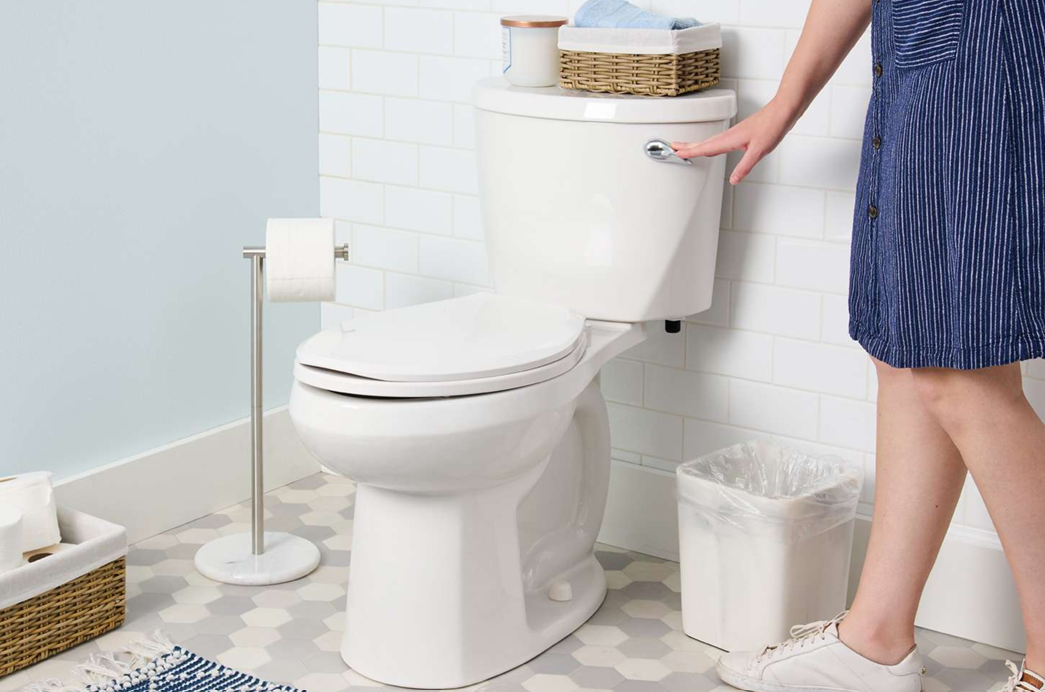 Crapper’s toilets often used elevated cisterns (mounted high on the wall), which improved flushing power through gravity. He helped standardize these systems and make them more efficient and dependable.
One of his biggest innovations was marketing. He opened one of the first bathroom showrooms, allowing customers to see and select fixtures. This helped normalize indoor bathrooms at a time when they were still a luxury.
Through his work, Crapper contributed to better urban sanitation during a time when cities like London struggled with waste management and disease. His installations improved hygiene and public health.
The 20th century cemented the toilet’s role as a symbol of progress. Indoor bathrooms became standard in Western homes. Porcelain replaced wood and metal as the material of choice, offering both hygiene and beauty. Water-flushing systems became standardized, linked to municipal sewer systems that defined modern urban life.
Design aesthetics evolved too. From the heavy, wall-mounted tanks of early models to the sleek, integrated designs of the 1950s and beyond, the toilet mirrored broader architectural and lifestyle shifts. In many cultures, it even became a statement piece — from art deco ornamentation to the sculpted minimalism of contemporary European fixtures.
And while most users saw only the glossy porcelain, beneath it all was a marvel of hydraulic design: a precisely balanced system of water pressure, siphoning, and venting that made waste disappear with the pull of a lever, or, later, the push of a button.
The Toilet as Watershape
It’s worth noting that toilets are not merely utilities; they are engineered water features, perhaps the most ubiquitous of all. Every flush represents a tiny hydraulic event, a performance of flow, force, and suction. The toilet’s shape — bowl contours, trap curvature, flush angles, are all sculpted by fluid dynamics.
Just as a fountain designer tunes the arc of a jet or the rhythm of a cascade, toilet engineers optimize every millimeter to guide water’s movement. The relationship between aesthetics, hydraulics, and function is every bit as deliberate as in a reflecting pool or vanishing-edge spa.
By the late 20th century, a new challenge emerged: water scarcity. Traditional toilets used 3.5 to 7 gallons per flush, an untenable figure in an era of conservation. In 1992, the U.S. Energy Policy Act mandated that new toilets use no more than 1.6 gallons per flush (GPF), a change that sparked both innovation and frustration.
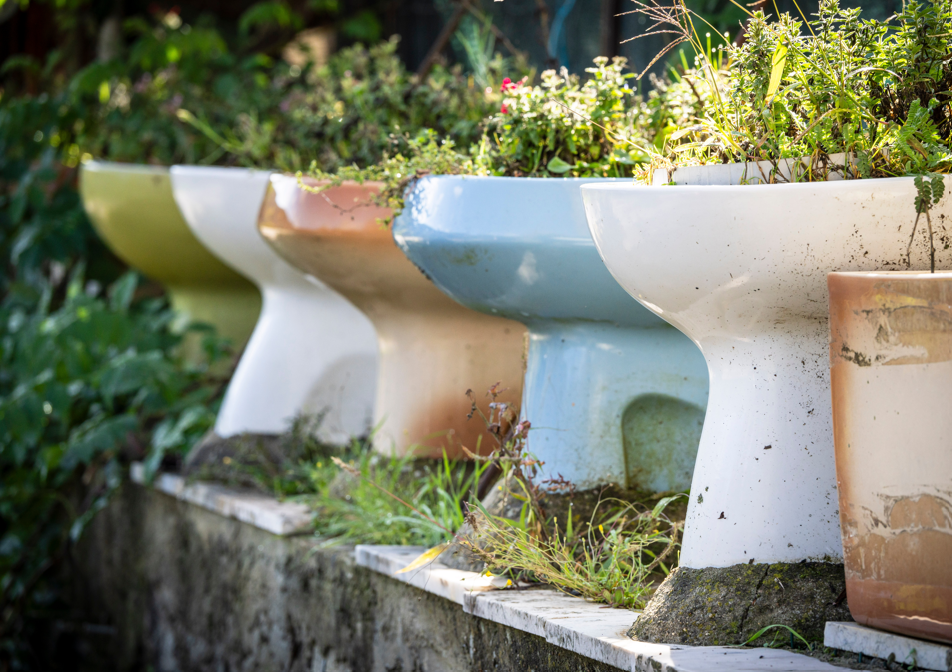 Early low-flow models often performed poorly, leading to the infamous “double flush problem.” But engineering soon caught up. Pressure-assisted systems, dual-flush mechanisms, and reengineered trapways restored performance while slashing water use. The toilet became a frontier of sustainable design.
Today, some high-efficiency models use as little as 0.8 GPF, while composting and vacuum-assisted systems eliminate the need for water altogether. Despite the ubiquity of toilets in developed nations, the global sanitation crisis remains one of the 21st century’s most pressing challenges. The World Health Organization estimates that over 3.5 billion people still lack access to safe sanitation, leading to disease, pollution, and the degradation of waterways.
Here, the toilet becomes more than a convenience; it is a matter of human dignity, gender equality, and environmental justice. Engineers, NGOs, and innovators are racing to create affordable, off-grid systems that treat waste locally, bringing the lessons of advanced hydraulic design to the most basic human need.
The Future of Hygiene
The toilet of the future may not only flush — it might analyze. Today’s “smart toilets,” pioneered by Japanese manufacturers like Toto, integrate bidets, heated seats, deodorizers, and sensors that monitor health indicators through waste analysis. In hospitals, similar systems are being developed to detect early signs of disease.
Meanwhile, designers are experimenting with aesthetics: sculptural forms that blur the line between fixture and art, wall-hung models that make bathrooms feel spacious, and even transparent prototypes that explore our relationship with privacy and function.
Waterless and foam-based toilets are gaining traction in sustainability circles, while 3D-printed ceramic fabrication opens new design horizons. In essence, the toilet continues to evolve in the same way fountains, pools, and spas do, as reflections of culture, technology, and our understanding of water’s place in our lives.
Few objects in the modern world walk a finer line between utility and taboo than the toilet. Yet artists and designers have long been fascinated by its symbolic power and formal beauty.
The trend toward “artsy” toilets began in 1917, when avant-garde artist Marcel Duchamp submitted a porcelain urinal titled Fountain to a New York art show. Reoriented on its back and signed “R. Mutt,” the piece challenged the very definition of art, transforming an everyday fixture into an icon of conceptual thought. That single act redefined the relationship between design, function, and artistic meaning.
In the decades since, toilets have reappeared in galleries, public art, and design museums around the world. Japanese designer Shigeru Ban’s transparent public toilets in Tokyo — which turn opaque when occupied — explore trust, privacy, and technology as part of urban life. The Guggenheim Museum’s America (2016), an 18-karat gold working toilet by Maurizio Cattelan, invited visitors to experience luxury in its most absurd form.
High-end manufacturers such as Kohler, Duravit, and Toto now commission artists and architects to shape limited-edition toilets that fuse sculpture and function. With smooth organic curves, matte finishes, and concealed plumbing, these pieces evoke the purity of modern sculpture — an echo of Brancusi as much as of bathroom design.
At their best, artful toilets remind us that design and dignity are not separate. Even the most practical water fixture can be a work of intention and grace — a meditation on flow, form, and what it means to be human.
A Fitting Reflection
It’s easy to overlook the humble toilet. Yet it is, arguably, the most influential water feature in human history. It embodies every discipline that WaterShapes celebrates: hydraulic precision, structural ingenuity, environmental awareness, and aesthetic refinement.
From ancient stone benches to sensor-equipped ceramic marvels, the toilet is a living timeline of civilization’s relationship with water, and with itself. To understand its evolution is to recognize that the art and science of shaping water extends into even the most private corners of our built environment.
In that sense, the toilet is a mirror — of culture, of progress, and of the enduring human drive to make water serve both function and beauty.
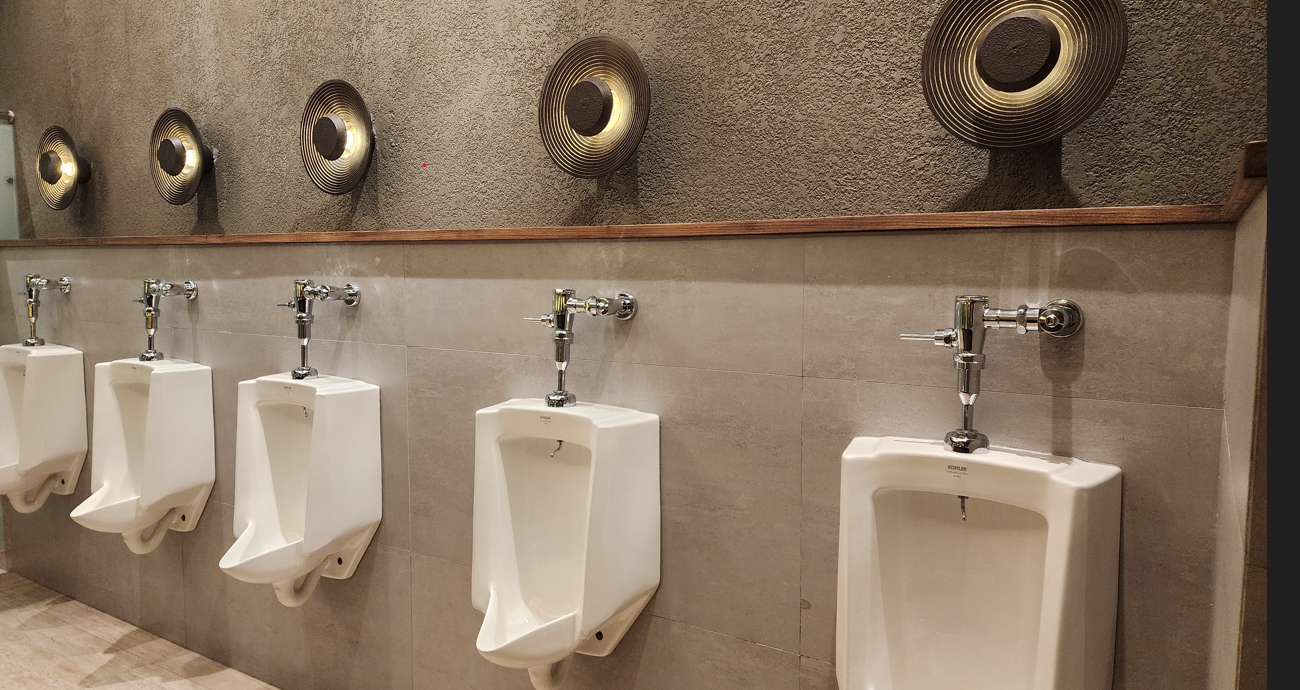
Opening golden toilet image by Lev Radin | Shutterstock; Ancient toilet images by Uladzimir Navumenka | Shutterstock; Garden toilets by Michael Kaercher; Stand-up toilets by Bananaprezz | Shutterstock.