








Visiting a Classic
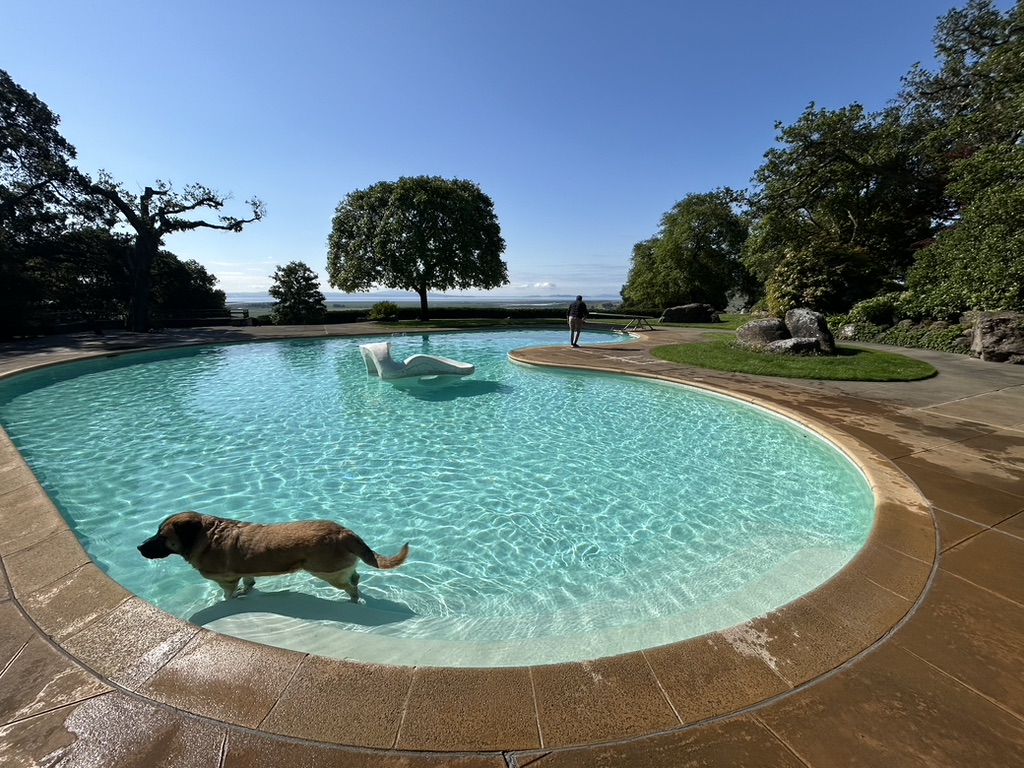
The northern-California pool and surrounding landscape designed by legendary landscape architect Thomas Church on a property known as Donnell Ranch stands as one the most influential pools of the 20th Century. For builder Chuck Baumann, an unlikely set of circumstances led him to the property and the inspiration that can come from studying a masterpiece.
Editor’s note: This story is an excerpt from Chuck Baumann’s upcoming autobiography, “Pools of Passion.”
By Chuck Baumann
This is an almost unbelievable story that amazingly combines a very old cigarette lighter and one of the world’s most famous and influential swimming pools.
In the 1950s and ’60s, smoking was as common as handshakes, completely unlike today when the health impact of smoking has made it taboo in many respects. Back then, there were smoking sections on airplanes and public restrooms had ashtrays.
My dad, ever the businessman, found a unique way to leave his mark: he gifted custom cigarette lighters to his clients. These weren’t just any lighters. They bore the name of his company, King Neptune Pools, and on them was a surprisingly vivid image of a swimming pool. His thinking was that people would associate the enjoyment of smoking with owning a pool. It made sense at the time.
Connecting with History
It wasn’t until much later in life that I made a discovery that would connect my father’s work to one of the most iconic swimming pools in history, the Donnell Ranch pool, designed by the legendary landscape architect Thomas Church.
I had always admired Thomas Church’s work. His book, “Gardens are for People,” had been a major influence on me, and when I was hired to renovate a backyard in Piedmont, originally designed by Church in the 1930s, I knew I had to immerse myself in his philosophy. This led me down a path of research, ultimately bringing me to the Donnell Ranch pool. It’s a truly iconic pool and I’ve come to appreciate the sweeping influence Church had on backyard design in the post-war era.
His pool at Donnell Ranch and the surrounding landscape defined free-form pools and hardscape, concrete decking, planters, step treatments and countless other details, all of which became familiar features in the suburban backyard.
As an interesting aside, because his design became the model for countless pools since, it’s fair to say that Church essentially drove the concept of the modern-day skateboard park. Back in the 70s, California experienced a severe drought, which left many pools empty. This coincided with the rise of skateboards, which in turn led to opportunistic riders trespassing onto properties with empty pools where they would ride the walls of the vessels. The curved coves provided a perfect concrete “wave” enabling the best riders to rise the vertical walls.
That’s just one widespread example of how Church’s design rang the bell in the variety of directions.
Back to the Lighter
What does any of this have to do with my dad’s lighters?
As luck or fate would have it, coincidentally during the time I was doing my research, an old childhood friend called me up, urging me to check Facebook. She had stumbled upon something she knew would blow my mind. I opened the page and saw it, a post featuring a photograph of my father’s cigarette lighter, aged and tarnished, but unmistakable.
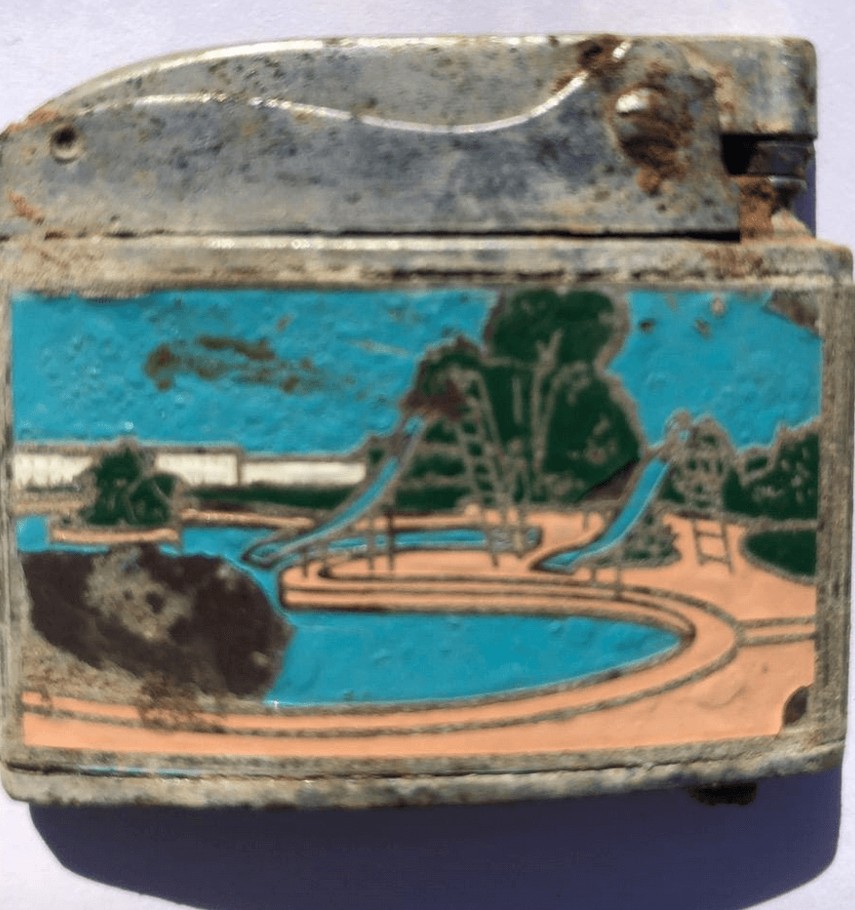
The man who posted it explained how he had found it a decade earlier while tilling his acre-and-half property. He had placed it on a stone wall and promptly forgot about it. There it sat undisturbed for 10 years before he found it again, and then decided to share it online. Little did he know that this small artifact held an entire history, and the image of a pool seemed strangely familiar.
Through a few messages, I learned that this man lived just a half mile from my home. As fate would have it, the lighter had been discovered on the very property where my father had once built a pool for a developer named Jack Looney. The chain of events was almost too incredible to believe.
I knew I had to reclaim this little piece of family history. I met the him in person, ready to make an offer. Instead, he simply handed it to me, no charge. I insisted on gifting him a fine bottle of wine in exchange, which he accepted.
Examining the lighter, it dawned on me, the pool depicted on the rusted metal lighter body, looked just like the Donnell Ranch pool.
With the lighter in hand, my curiosity about the Donnell Ranch pool deepened even further. I scoured Google Earth, determined to pinpoint its location. After painstakingly cross-referencing old photographs with the Sonoma County landscape, I found it. The realization sent shivers down my spine.
Being There
But finding it on a map wasn’t enough. I wanted to be there, to stand in the presence of the pool that had inspired a generation of designers. After a bit more online research, I was able to reach out to the Donnell family, introducing myself and explaining my connection.
To my amazement, they responded warmly and invited me to visit. Nicco joined me along with Peter Koenig, a longtime designer and collaborator of mine who was working with us on the Piedmont project.
When we arrived, the Donnell family greeted us like old friends. Their excitement matched ours, and we could tell they understood the weight of the moment. Walking through their home was like stepping into a perfectly preserved time capsule of mid-century modernism with redwood paneling, clean architectural lines, a design ethos that resonated deeply with me.
Then, we stepped into the backyard.
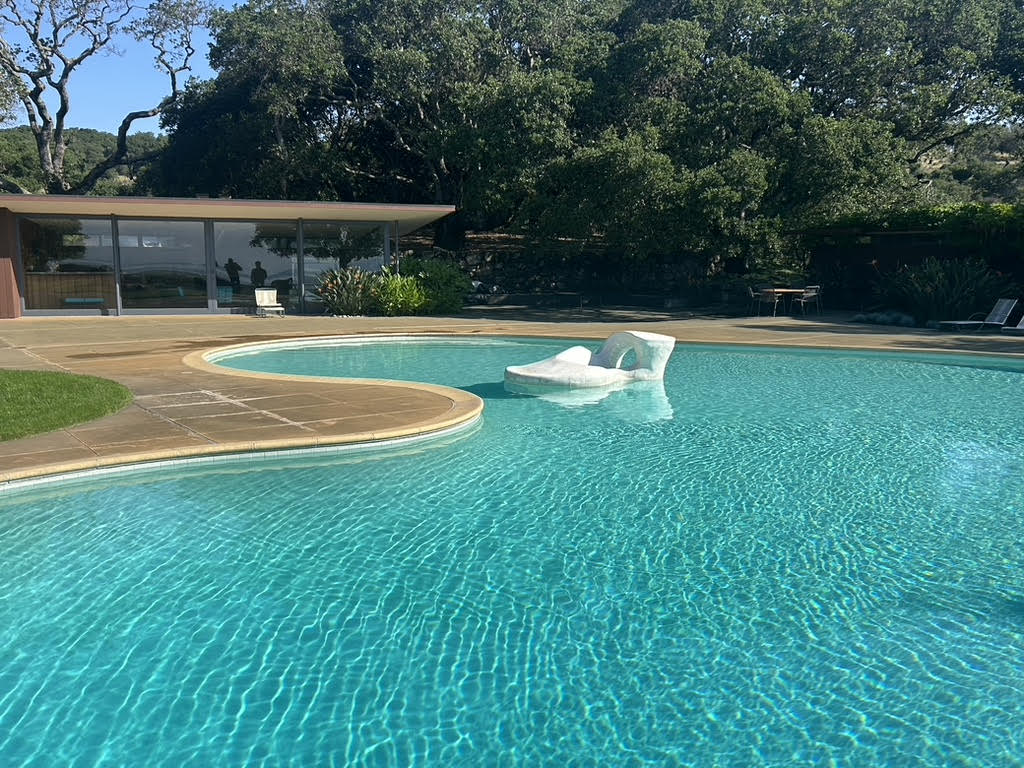
The landscape was breathtaking, every detail echoing Thomas Church’s genius. But the pool was something else entirely. As I stood at its edge, I pulled out my father’s lighter. I held it up, aligning its image with the very pool in front of me. The similarities were undeniable. My father’s lighter, created decades ago, depicted this pool.
It was a surreal moment, one that blurred the lines between past and present, between professional admiration and personal history. I turned to the Donnell family and showed them the lighter. They were as stunned as I was by the uncanny connection.
This journey was more than just a research trip. It was a full-circle moment, linking my father’s legacy to one of the most significant swimming pools ever built.
Standing there with my son, I felt the weight of history. I wasn’t just a pool designer, I was a storyteller, a bridge between generations of craftsmen.
As we left that day, I knew this experience would stay with me forever. My father’s lighter, once a forgotten artifact, had guided me back to a piece of history that was always meant to be part of my story.
Honoring Design Intent
That visit would prove invaluable in our work on the Piedmont project. Overall, the transformation we worked there stands as a perfect example of seamlessly updating the pool and surrounding spaces, while preserving the essence of the original design. Peter worked closely between our clients and our team, ensuring that we upheld the integrity of the historic space, while meeting the clients’ needs.
The true challenge was finding a balance between maintaining the backyard’s existing theme while incorporating modern construction techniques that meet today’s high standards.
One of the most captivating aspects of this backyard is its wealth of micro-environments, each carefully defined by pathways, varying textures, and subtle elevation changes. The goal was to create a space that flows naturally from one area to the next, while maintaining the charm and character of the original vision.
I had the perfect opportunity to assess our work firsthand when our clients invited me to a social gathering. Among the 75 guests in attendance, I observed something remarkable, everyone gravitated toward a different corner of the outdoor space, effortlessly finding their own comfortable nook. That was the moment I knew we had achieved something special.
Traditionally, backyard swimming pools were seen as daytime luxuries, but today, we design them to be equally enchanting at night. Thanks to advancements in LED lighting, we can strategically place accent lights to enhance both functionality and ambiance, transforming the backyard into a beautifully illuminated retreat after sundown.
For me, creating this kind of inviting nighttime atmosphere starts with well-lit spas, mesmerizing water features, and thoughtfully designed entertainment spaces. Outdoor kitchens, pavilions, and perhaps the most alluring of all, fireplaces and fire pits near the pool all contribute to a warm, welcoming environment.
Crafting Experience
These elements elevate the outdoor experience, making it a place not just to swim, but to gather, relax, and enjoy every moment, day or night. It’s a privilege to be part of an industry where our creativity can redefine how people enjoy their outdoor spaces.
When we approach a project, we don’t just think about the swimming pool but we think about the entire backyard as a cohesive living space. We strive bring together a range of exciting lifestyle features that make each project truly immersive.
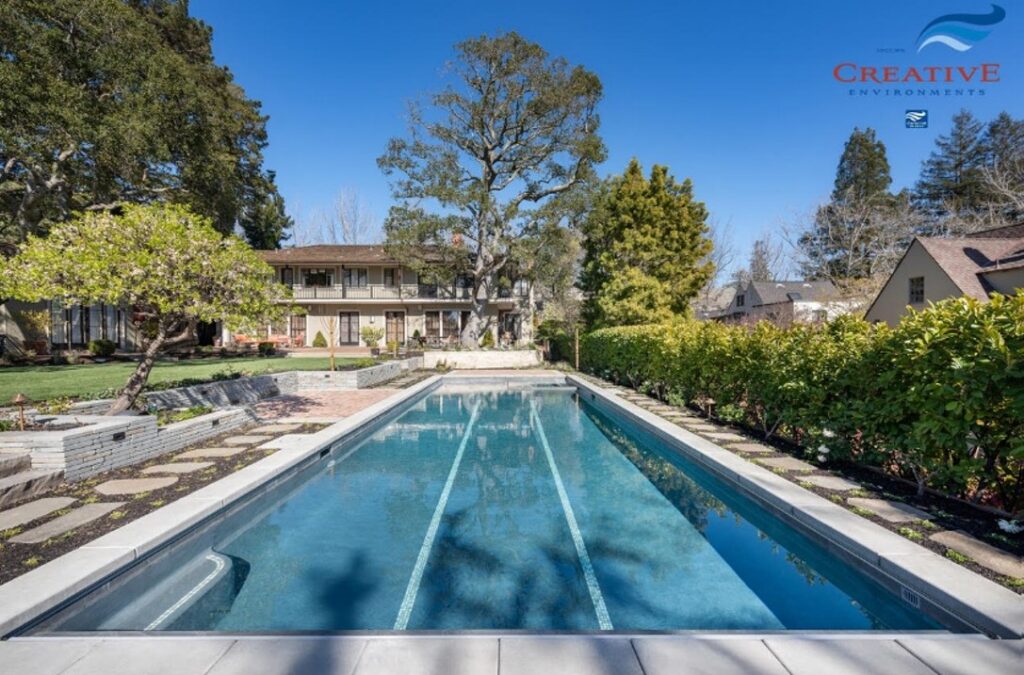
Our design seamlessly transitions from pavilions to outdoor kitchens to sports courts, all framed by lush landscaping and ambient lighting. Well-placed concrete paver pathways guide guests naturally through the space, leading them to a swimming pool that isn’t just filling an empty spot in the yard but is purposefully oriented to create a smooth and intentional flow from the house.
Spa and water features add another layer of beauty, not just from the house looking outward, but also from the pool and spa looking back toward the home. This project is a shining example of how we thoughtfully plan micro-environments in every design we create.
Making the Scene
Our goal is to craft outdoor spaces that feel both natural and extraordinary. Spaces that invite people in, encourage connection, and evolve beautifully from morning light to evening glow. This project is a testament to that vision, and I couldn’t be prouder of what we’ve accomplished.
In this case, we used a variety of brick, step and decking details to articulate the structures and spaces within the yard. Staggered tumbled bluestone adorns the surface of a low retaining wall that defines the pool area. The pool deck is a combination of reclaimed and new tumbled brick.
The pool redesign includes among other contemporary amenities, a broad tanning or Baja shelf. We worked with a tile artist to create an original mosaic on the shelf.
The design concept was to express the feeling of stepping into the water. It starts with a cluster of tiles that incrementally disperse into a spreading pattern as you move closer to the edge of the shelf, a visual metaphor to releasing yourself into the immersive aquatic experience.
It’s a wonderful detail that was based on wanting to do some purely artistic statement that was inspired by the Church and the Donnell Ranch pool, and a very old cigarette lighter.
Post script: Just this spring, we were contacted by the Donnell family to perform a cosmetic renovation of their classic pool. Coverage of that work will follow soon.
Chuck Baumann owns Creative Environments in Alamo, Calif.. He grew up with custom pools: His father started a business in the 1950s, instilling in his son a dedication to creativity he’s applied to more than 1,500 of his own projects.
Chuck shared this story with Mike and Trey Farley on their Luxury Outdoor Living podcast. Listen to the episode here.