








The Price of Precision

Master pool builder, Dave Penton, shares why charging higher prices in swimming pool construction comes down to precision, professionalism, and uncompromising attention to detail. From excavation and steel installation to plumbing, shotcrete, finishes, and equipment layout, Penton explains how discipline and lifelong learning justify premium pricing.
By Dave Penton
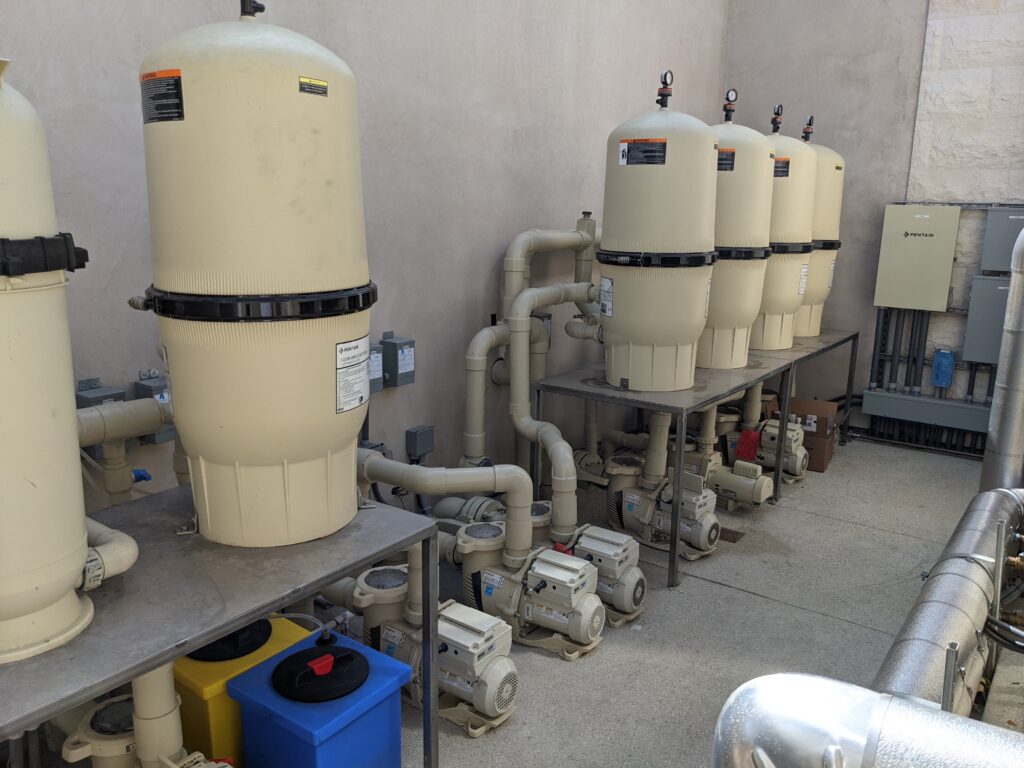
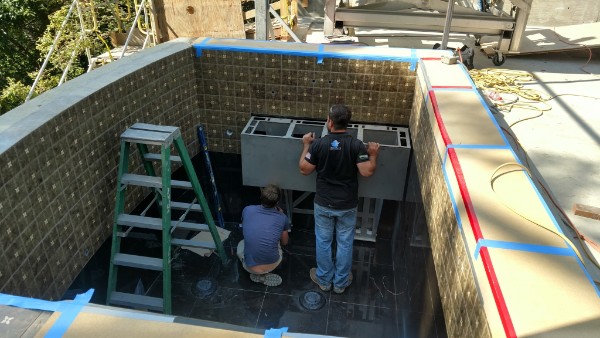
Not long ago, I came across a photograph from my team that stopped me in my tracks. One of our plumbers was on a jobsite, setting string lines and carefully measuring the precise location of filters on an equipment pad. Now, most clients will never step foot on that pad and they’ll certainly never notice . They’ll never appreciate the level of detail, whether the filters line up in perfect symmetry or whether the piping is laid out like a technical drawing come to life. But here’s the thing: those details matter.
That photograph reminded me of something I try to impress upon every contractor I talk to: the justification for charging more for your work doesn’t come from salesmanship, slick words, or marketing gimmicks. It comes from discipline, the kind of discipline that shows up in unseen corners of a project. Lining up those filters with precision, tucking away pipes in clean runs, even when they’re buried or hidden, ensuring that every system is as logical and maintainable as possible, that is what justifies higher prices. Because those details represent care, professionalism, and a commitment to your clients’ interests.
Taming the Beast
A swimming pool is not a monolithic object. It is an amalgam of thousands of details, both seen and unseen. Any one of those details, excavation, layout, forming, steel installation, plumbing runs, electrical systems, shotcrete, curing, waterproofing, plaster, tile, coping, decking, equipment placement, can be a failure point. Every one of them, if done incorrectly, can lead to catastrophic problems: structural cracks, water leaks, corroded systems, poor circulation, plaster failures, or mechanical breakdowns. The more disciplined you are at managing those details, the fewer risks and future warrantee calls you leave behind.
It’s true that some contractors cut corners where unseen details are concerned as a way to reduce costs and compete on cheaper projects. I believe that if you lose out because you’re focused on doing the job correctly, it’s part of the price we pay for working at an extremely high level.
Take excavation and layout. If the hole isn’t dug to spec, the rest of the project is compromised before it even begins. Forming follows and those forms must be true to the design, level, plumb, and properly braced. If you fudge the formwork, you guarantee problems with shotcrete placement later. Steel installation is another: every bend, every tie, every piece of rebar contributes to the structural integrity of the vessel. Miss a tie or shortcut spacing, and you’re inviting cracks or rust stains years down the road.
Then there’s plumbing, which I’d argue is one of the most overlooked arts in pool building. Plumbing isn’t just about moving water from one place to another. It’s about achieving proper hydraulics, balanced circulation, and long-term reliability. If your plumbing isn’t designed and installed with precision, you’re not delivering the system your client paid for. It’s that simple.
Electrical work is similar. Conduits, bonding, grounding, control systems, all are critical to both safety and function. You can’t afford sloppiness when you and those who come later doing repairs are dealing with electricity around water.
Shotcrete placement and curing are equally critical. I’ve seen entire projects ruined because shotcrete wasn’t placed correctly, wasn’t cured properly, or wasn’t protected during the early stages. That’s not an “oops” you can just fix with plaster.
And, let’s talk about plaster. Or exposed aggregate, or tile finishes. These are the most visible details to the client. A finish done well becomes a source of pride, a shimmering surface that ties the entire watershape together. Done poorly, it becomes a constant reminder of failure, visible every time the client looks at the water.
When you step back and look at all of this, you realize that charging more for your work isn’t gouging or somehow unfair. It’s simply reflecting the true cost of delivering excellence. A pool that’s properly built, down to the last detail, is a system that will perform to spec, last indefinitely, and require far less in the way of costly repairs and remediation. All of this begs the questions, are you billing for the time it takes to achieve perfection and what would it cost to hire “you”?
I’ll say it plainly: the cost of fixing mistakes later is always greater than the cost of doing it right the first time. That’s a rule to which there are virtually no exceptions.
That’s why I’ve long argued that an equipment set should be treated as a form of technical artwork. A precision system, laid out with forethought, built with pride, and delivered as a finished product that not only works, but is also a pleasure to service. That mindset, treating even the hidden systems as artwork, is what separates the average builder from the true professional. There’s fine line between good and great, but the differences are extremely important.
Getting There
How do you get to that point? It doesn’t happen overnight. You don’t wake up one day and suddenly become the kind of builder who can command higher prices with confidence. To justify greater income, to become the kind of professional who earns not only more money but genuine respect, you have to dedicate your career to learning.
There is no shortcut. No magic pill. You make learning and applying what you learn part of your professional DNA. You find knowledge in seminar rooms at programs like Watershape University. You read trade journals. You study online resources. You seek out mentors and like-minded professionals who will challenge you to raise your game. You learn to listen to what others have to share. And most importantly, you learn by doing. And, I believe, it’s important to tap into available educational resources, both inside and outside the industry.
When you take that knowledge back to the field, you start applying it in real ways: lining up grout lines with the pool structure, creating perfectly level weir edges, designing plumbing systems that evenly distribute flow across the body of water, ensuring rebar spacing is always correct, insisting that waterproofing steps are followed meticulously, and double-checking finish details until they are flawless. I believe it’s important to learn the art of the telling the client when something isn’t good enough and needs to be done correctly. These are the things that, one by one, build your reputation.
Keep in mind, if you’re margins are so razor-thin that you think twice about doing the job correctly, then you’re obviously no charging enough.
And here’s the beauty of it: constructing a body of water is a pursuit you can spend your entire life on and still never know it all. That’s part of the craft. It is an art form, a discipline, and a profession aimed at delivering an experiential product that directly impacts people’s lives. The higher you reach, the greater the rewards, not just financial, but personal, as well. And don’t ever forget what watershapers do for a living, we build fun!
When you deliver pools at this level, you’re not selling holes in the ground filled with water. You’re selling reliability, beauty, and joy. You’re selling peace of mind. And that, without question, is worth every penny.
Dave Penton is the founder and president of Fluid Dynamic Pool & Spa in Fullerton, Calif. He specializes in building custom watershapes mostly in Southern California. He is a founding member of International Watershape Institute (IWI) and Ask the Masters.
Special thanks to Kevin Cobabe for his assistance bringing this article together.