








A Visual Touch: Composing Space Through Texture
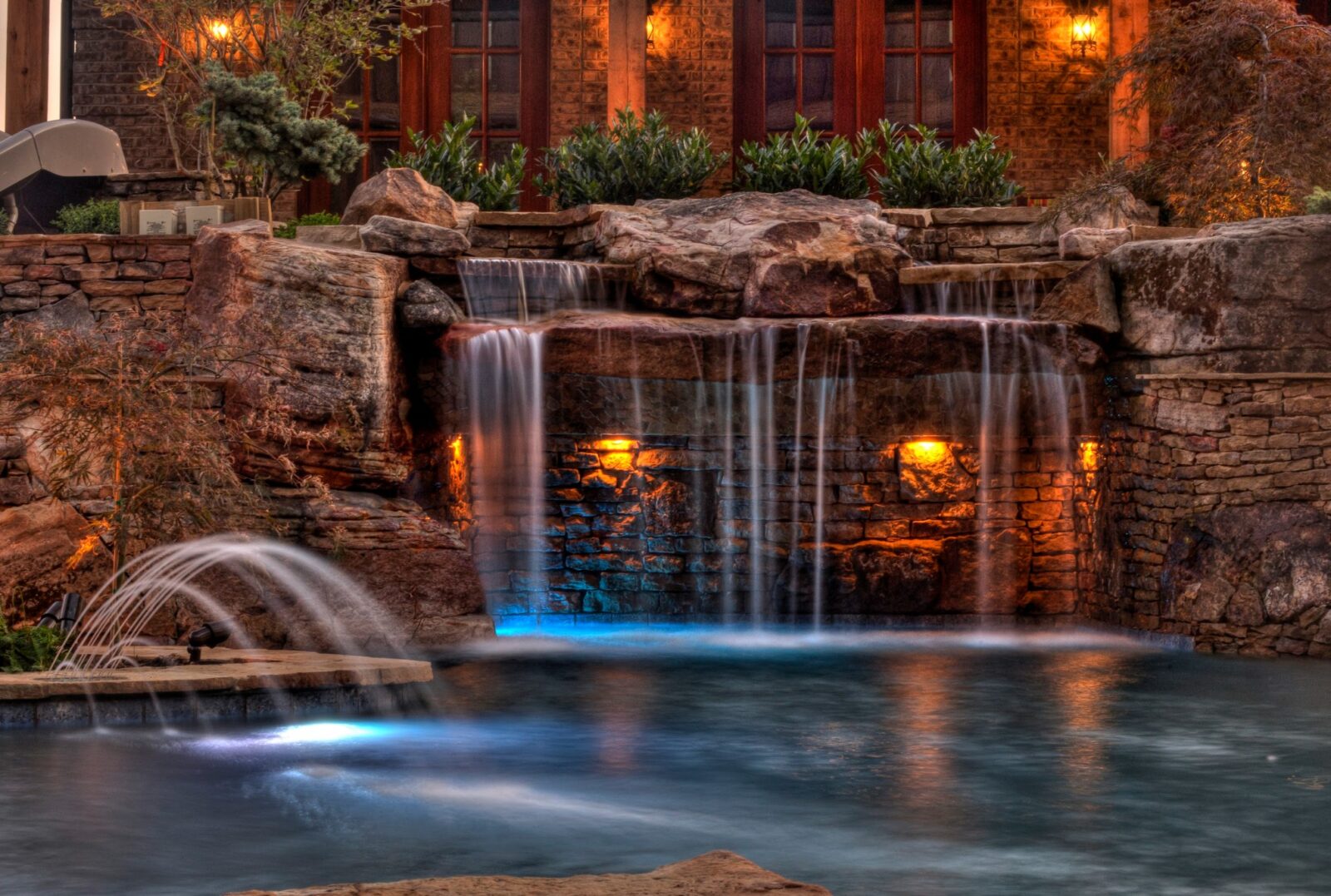
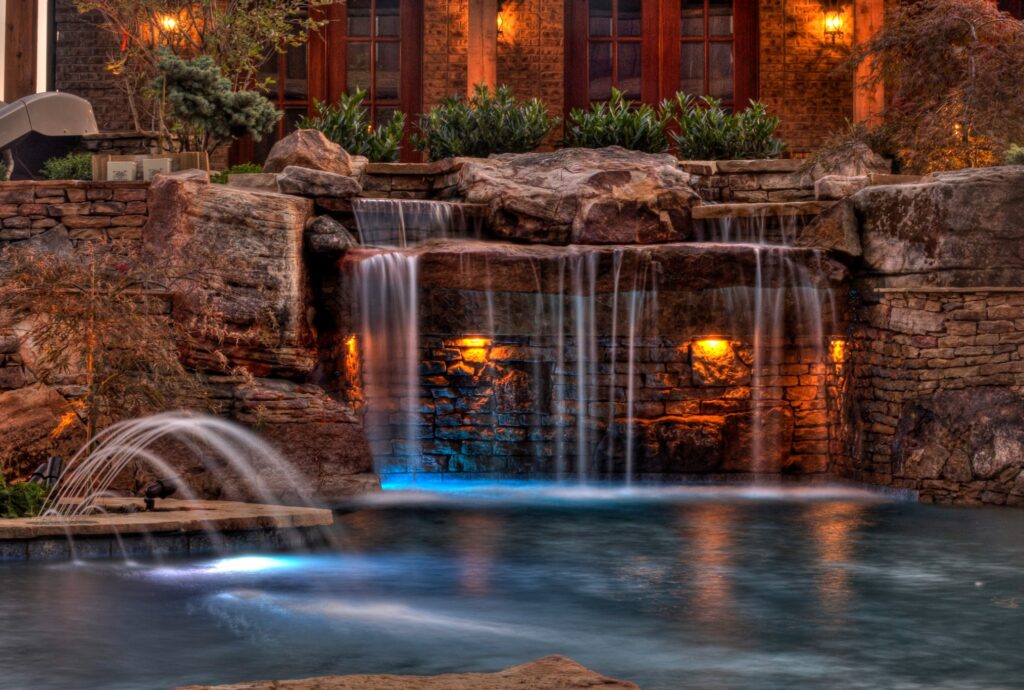
Texture is the quiet force that gives space its depth, legibility, and emotional charge, says Jason Brownlee. Describing it as the “teeth” of design, he explains why texture often does more work than color ever could in creating visual interest and a sense of design intent, especially when working with water.
By Jason Brownlee
When most people hear the word texture, they instinctively think of their fingertips, recalling the sensation of touching sandpaper or silk, of grit and polish, of smooth glass or rough stone. Texture, in that common sense, is tactile. It’s something you feel.
But in design, especially landscape and watershaping design, texture reveals itself first through the eyes. You see it before you ever touch it. In fact, you can often understand it completely without touching it at all. Visual texture is where the real work begins, because it is texture that captures attention, defines form, and delivers information to the brain long before color makes its entrance.
Seeing Before Touching
When you enter a space, your brain does a rapid assessment. Is there anything interesting here? Anything worth paying attention to? In a flat, shiny, uniformly smooth environment, that assessment happens almost instantly, and then your mind moves on. There’s nothing to hold onto.
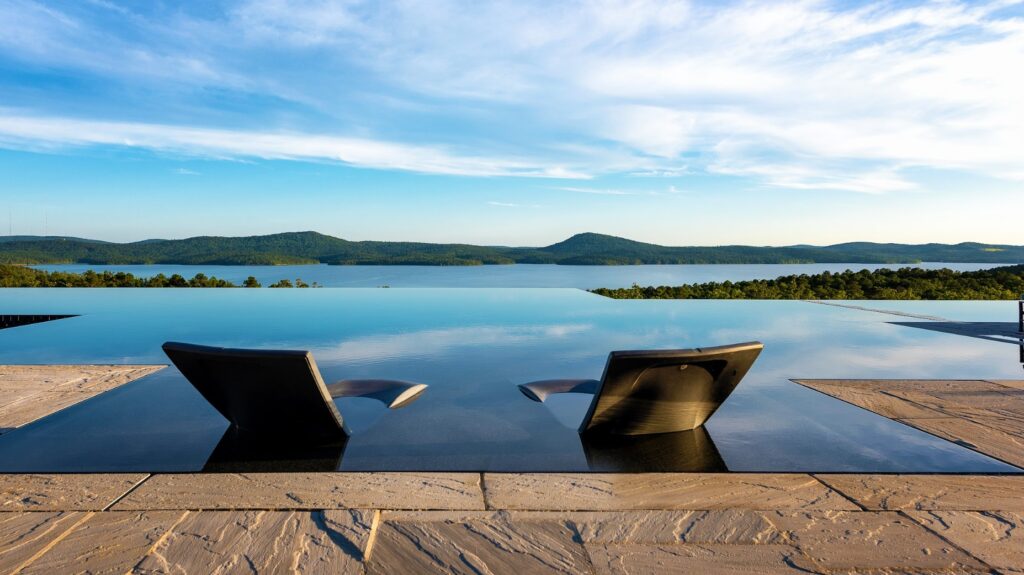
In a space with deliberate textural variation, something else happens. The eye slows down. The brain starts processing layers of information: shadow and light, soft against hard, rough against refined. Texture introduces complexity, and complexity creates engagement. You don’t just see the space, you begin to explore it, even subconsciously.
This is why texture is such a powerful spatial tool. It articulates edges, establishes hierarchy, and gives shape meaning. A wall is not just a wall once texture enters the conversation, it becomes a surface with depth, scale, and intention.
Contrast the Composer
Texture works best in contrast. Think of music rather than materials. A song that is loud all the way through eventually becomes noise. A song that whispers the entire time fades into the background. But when you place the two together, when thunder gives way to delicacy and back again, both moments gain power.
Queen’s Bohemian Rhapsody is a perfect example. So is Stairway to Heaven. A jazz and blues singer can belt soulful tunes, but when they add a touch of gravel to their voice, the song touches the soul. Texture in music lives in the transition, and so does texture in space.
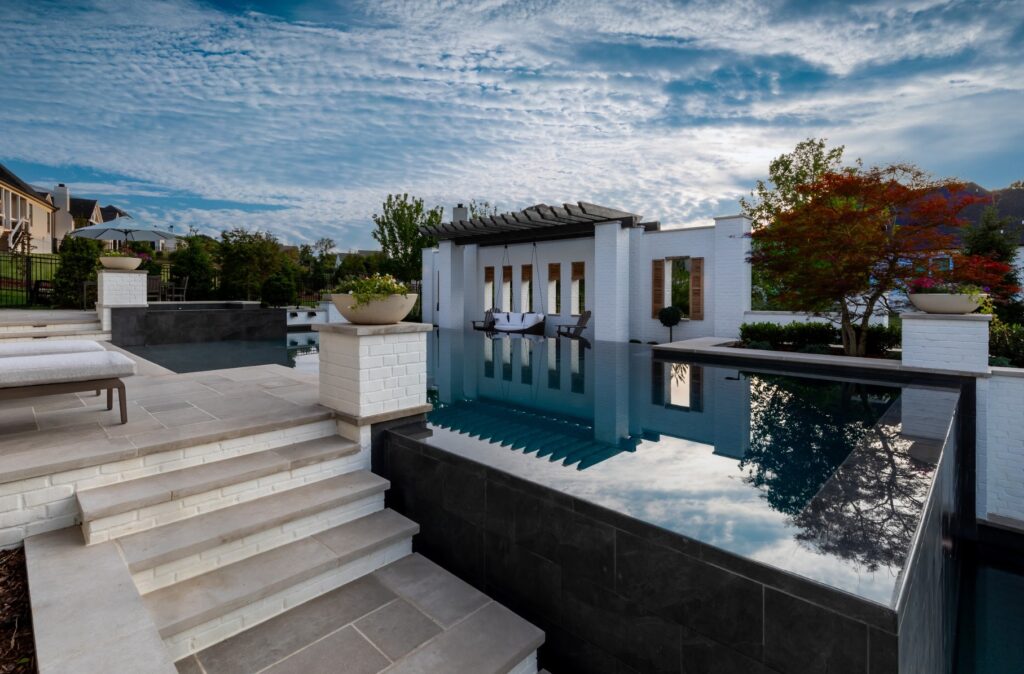
In watershaping, this might be as simple as a band of glass tile set against smooth plaster, or glass paired with a rough pebble interior. The glass doesn’t stand out because it’s beautiful on its own; but because something different sits beside it. Without that contrast, even the most exquisite material can disappear.
That contrast, however, has to be thoughtful. The elements must belong together. They often share a common color base, scale, or rhythm that allows them to transition gracefully. If contrast is handled poorly, the seam between textures becomes the focal point, and not in a good way. It can feel jarring or unresolved. When done well, though, contrast becomes enriching. It draws the eye and anchors the experience.
Why More Than Color
Color is powerful. It’s emotional. It’s often what clients respond to first. But color is not structure, it’s finish. A strong design must stand on its own without it.
One of the simplest ways to prove this is to remove color entirely. When you look at a truly successful design in black and white, it still works. Balance, proportion, rhythm, and, most importantly, texture are still doing their jobs. Color becomes the icing on the cake, not the cake itself.
This is why the work of photographers like Ansel Adams remains so compelling. Yosemite is not lacking in color, but Adams stripped it away to reveal form, contrast, and texture. The images are powerful because they communicate through structure rather than spectacle.
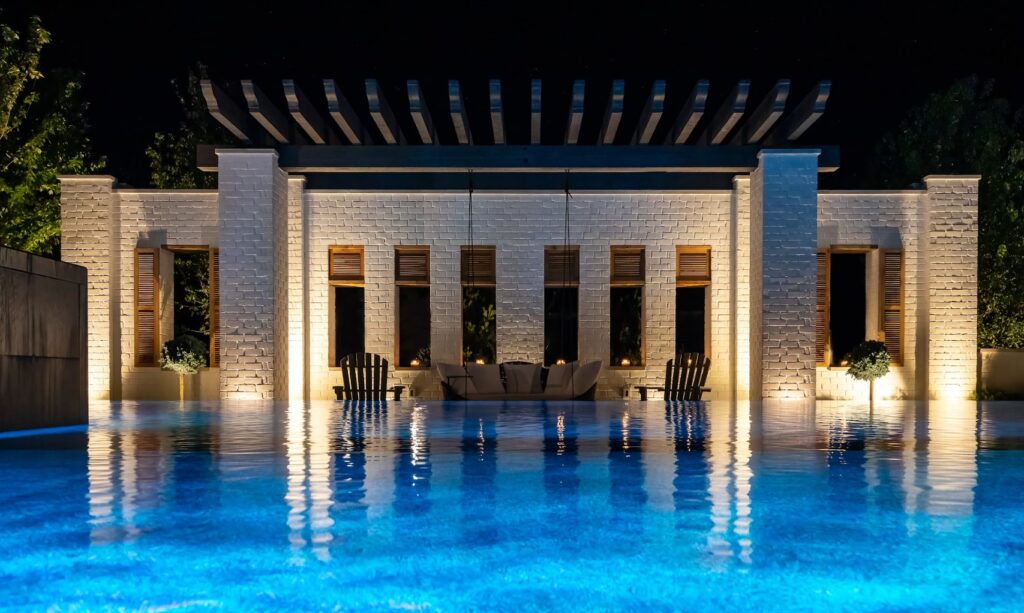
Color gets attention and certainly has its place in the spectrum of design elements, but texture carries meaning.
Time & Expectations
Texture also tells stories. Rough-hewn stone, uneven mortar joints, weathered surfaces, these elements reveal the hand of the maker and the passage of time. They connect us to process, to labor, and often to history itself.
This is why ruins are so compelling. When you stand among ancient stone walls softened by moss and erosion, you are seeing texture as a record of human effort meeting natural forces. You are connected to someone who stacked those stones thousands of years ago—and to everything that has happened since.
Japanese design traditions understand this deeply. Rather than overpowering nature, they allow natural textures to lead. Evergreen foliage, stone, gravel, water—each element brings its own grain and rhythm. The landscape becomes richer not by control, but by collaboration.
Texture also gives designers the opportunity to play with expectations. We assume glass will be smooth. We expect plaster to have some grit. When those expectations are subtly subverted, ultra-smooth stone, unexpectedly refined plantings, the brain perks up. Something familiar has been reintroduced in a new way.
This is where design becomes psychological. Once the foundational elements of a space are in place, texture becomes a tool for orchestration. Emphasis and void. Density and release. Places where the eye is pulled in, and places where it can rest. These moves shape how people feel, where they linger, and why they want to return.
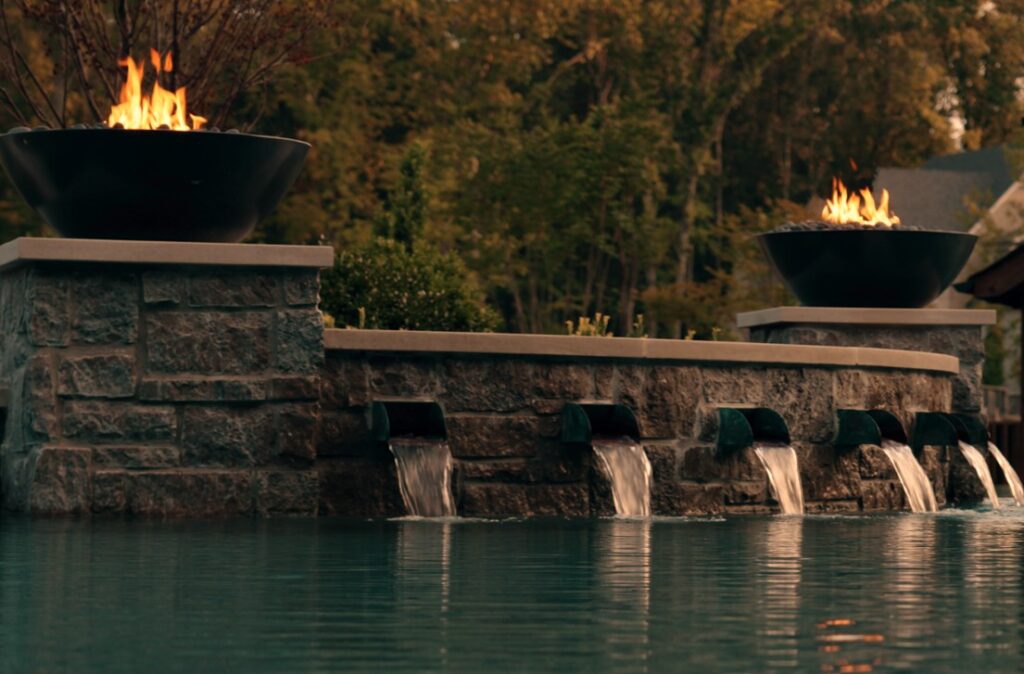
And return they do. The best spaces reward repeated visits. Texture changes with time of day, with light angle, with shadow length. Micro-shadows shift. Mortar joints become lines of movement. A space that felt calm in the morning might feel dramatic in the afternoon.
The Ultimate Texture: Water
And then there is water—the most dynamic texture of all.
Water is never static. It reflects the sky, absorbs light, reveals depth, hides it again. It can be a sheet of glass at sunrise and a restless field of motion by noon. It can soothe, invite, threaten, or seduce, sometimes all in the same day.
At Nazaré in Portugal, massive waves form not from storms but from underwater geology, shaping water into something monumental and raw. At a quiet lake in the early morning, that same element becomes perfectly smooth, holding the world in reflection. The material is identical. The texture is everything.
In watershaping, what happens on the surface is the story. It is the emotional interface between people and place.
Texture as Experience
Texture is not an accessory. It is not a detail added at the end. It is the framework through which space is perceived and understood.
Long before color speaks, texture has already shaped the experience, guiding the eye, defining form, and giving the brain something to hold onto. Once you start seeing it, you can’t unsee it. It’s everywhere: in walls, landscapes, ruins, paintings, music, and water itself.
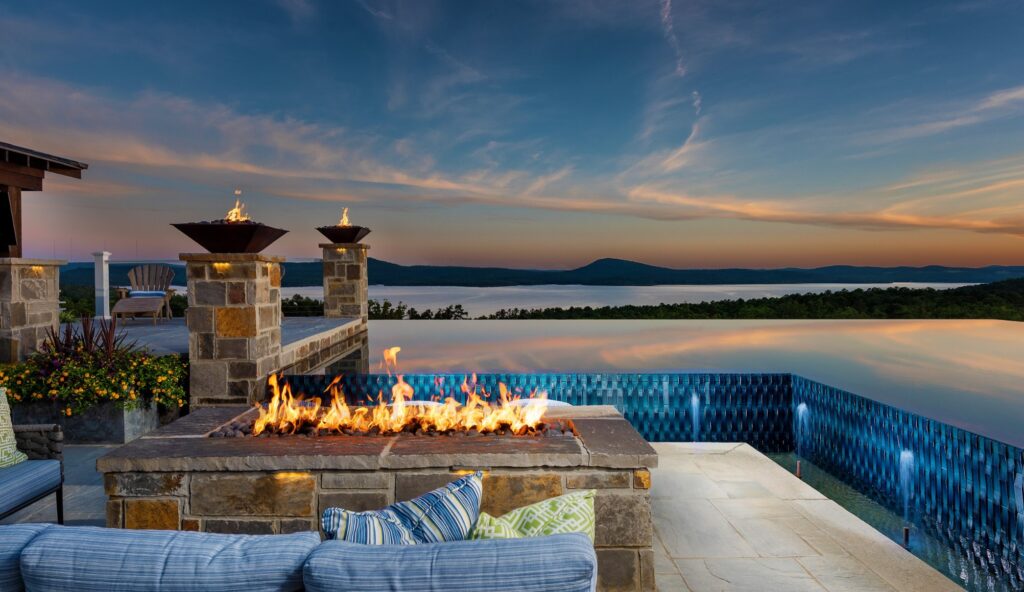
And when texture is handled with intention, it doesn’t just make spaces beautiful. It makes them enviable. The memory of the space sticks with you long after leave.
Jason Brownlee is a registered landscape architect with specialty masters level certifications in watershape design. He is the founder, president, and creative lead at the J. Brownlee Design Group (JBDG), and is the co-founder of Elevate Events — where he teaches Design, Construction, Engineering, Sales, and Business Development to aspiring industry leaders across the country. He teaches design for Watershape University.