








In Praise of the Cycle
Water is so commonplace in our daily lives, it’s easy to take for granted, even for professionals whose industry depends directly upon it. As Eric Herman points out, there’s never a bad time for increasing our knowledge and appreciation of the hydrological cycle—and all that it encompasses.
By Eric Herman
Let’s take a moment — a clear, refreshing moment — to appreciate the vast, elegant, life-sustaining miracle that is the hydrological cycle, the means by which water circulates through our world.
The hydrological cycle is a grand and wondrous loop — the planetary plumbing system that moves water, aka dihydrogen monoxide (H2O), through evaporation, condensation, precipitation, infiltration, and surface flow. Driving weather, agriculture, aquatic life, transportation, and the very nature of civilization itself, we literally cannot live without it.
Think of it: every drop of water you’ve ever sipped, soaked in, accidentally splashed on your khakis or used to fill a swimming pool, has been on an epic journey that has lasted eons. From the ocean’s shimmering surface to the underside of a cumulonimbus cloud, from mountaintop glaciers to the shimmering tile line of a courtyard fountain — water moves, transforms, and returns. Endlessly. Invisibly. Essentially.
The Most Precious Resource
Without the hydrological cycle providing a ready supply of fresh water, civilization struggles and then it ceases. Water riots in water insecure regions, largely in Africa and southern Asia, portend the kind of chaos that can result from water shortages. Thirst drives everyone mad and the potential for widespread chaos is immeasurable.
Agriculture, public health, manufacturing, recreation, even the simple dignity of a hot shower on a cold morning — all hinge on water being in the right place, at the right time, in the right form. It’s why the earliest cities grew beside rivers, why ancient engineers carved aqueducts through hillsides, and why indigenous peoples developed water-honoring traditions rooted in deep respect for the natural flows of their land.
Water covers more than 70 percent of our planet, yet almost all of it—about 97 percent—lies in the oceans, far too salty for human use (and so far, desalinization, an entire subject onto itself, has largely proven expensive and problematic to sustain.) Of the remaining three percent of water that qualifies as fresh, the vast majority is locked away in glaciers, ice caps, or deep underground aquifers, and as a reservoir of thin mist hovering in the atmosphere, sustaining weather and climate, aka. clouds.
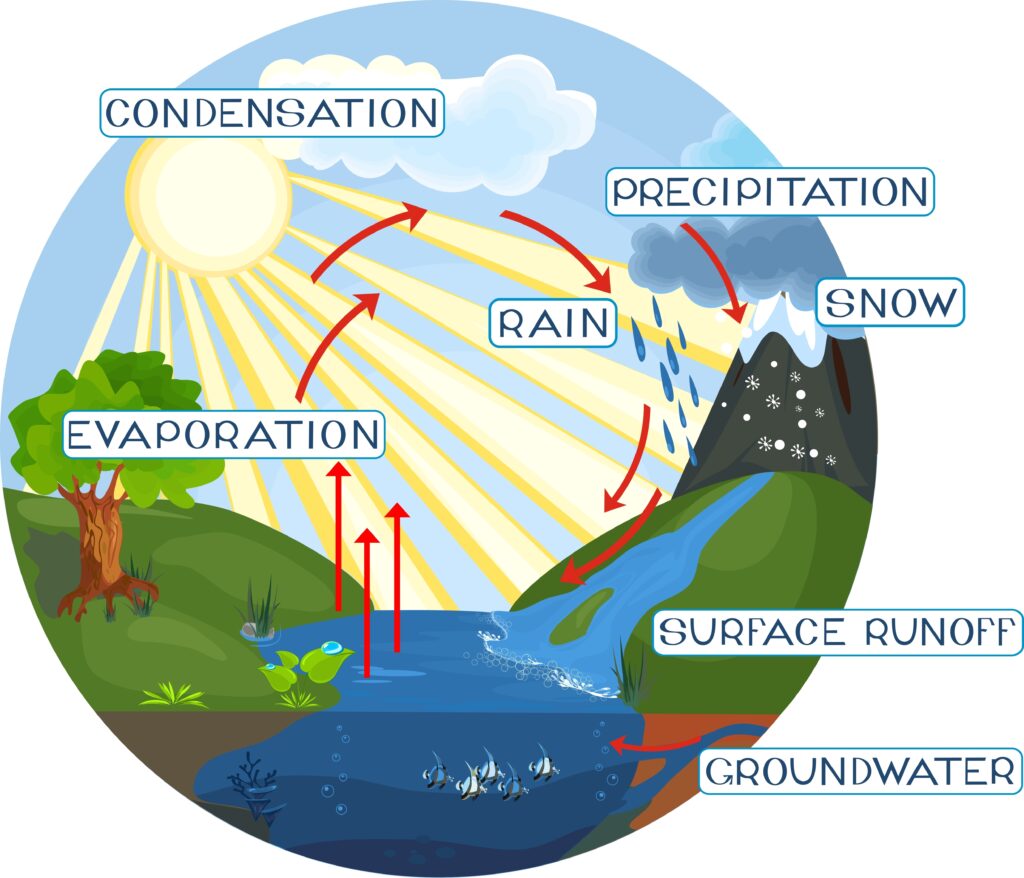
What’s left—our accessible supply of rivers, lakes, reservoirs and snow packs—amounts to less than one percent of the planet’s water, a fragile surface film that supports every farm, factory, and community. It’s a sobering reminder that what seems abundant is, in truth, exceedingly scarce.
And yet, in our modern, concrete-coated, instant-streaming world, we often forget how delicate and intricate that system really is. We treat water as an entitlement rather than a blessing. We contaminate it, redirect it, commodify it, and waste it, on an immense scale, all while expecting it to keep doing its magic uninterrupted. The clean water comes out the tap, and the dirty water goes down the drain. All you do is pay the water bill and voila! Thirst and dysentery are hypothetical, at least in the modern industrialized world.
Unfortunately, according to many scientists and researchers, we’re flirting dangerously with the boundaries of the system. From rampant pollution and microplastics to rising global temperatures and the alarming decline of freshwater resources, the challenges to the hydrological cycle are mounting. Ocean acidification, diminished aquifers, collapsing ocean currents, toxic algal blooms — they’re not fiction, hype or hoax. They’re verifiable fact. And as demand increases alongside population and industry, the pressure on water supplies continues to increase.
But here’s the silver lining (a cumulus one, if you will): we can still do something about it.
Water Wisdom
You don’t need a PhD or wear a lab coat to become a water-savvy citizen, and professional. In fact, if you’re reading WaterShapes, chances are you already think about water in creative, tactile, and dynamic ways. Pools, spas, fountains, ponds, rain gardens — they’re not just aesthetic luxuries. In many cases, they’re living demonstrations of water stewardship, microcosms of the larger system. They help cool cities, recharge groundwater, filter pollutants, and offer sanctuaries for both people and pollinators. They’re where hydrology meets humanity. And sometimes, they help fight fires.
When you design with water — shape it, move it, clean it, reuse it — you begin to understand its rhythms. We become de facto hydrologists and water aficionados, tuned onto the tempo of evaporation rates, soil absorption, mineral saturation, and pH balance.
Whether you’re balancing the chemistry in a spa or designing a cascading waterfall, you’re participating in a dialogue with nature. You’re learning to listen.
Understanding the hydrological cycle also means embracing its complexity. It’s physics, chemistry, engineering, ecology, and art — all in one never-ending grand oscillation. It’s water molecules on the move, yes, but it’s also metaphor and memory. Water is how we baptize, how we mourn, how we celebrate. It’s the essence of life and the heart of beauty.
So, the next time you see mist rising off a morning pond, or hear the joyful chaos of a backyard splash zone, take a second to marvel. That water has been falling as rain for billions of years, literally. It’s older than the pyramids. Older than language. It has flowed through forests and factories, through arteries and aqueducts. It was in the blood of dinosaurs and now, it flows through your hands.
Mindful Concern
Despite our frenetic world of infinite digital distractions and rapidly depleting natural resources, water reminds us to stay grounded — and fluid. It’s a humbling teacher, a relentless traveler, and an ever-patient partner in our pursuit of civilization. But it requires our care, our creativity, and most of all, our respect.
Let’s be better stewards. Let’s be curious. Let’s be champions of water not just in theory, but in every fountain, spa, stream, and soaking tub we touch.
Because when you understand the cycle, you understand life, an awareness essential today and for future generations.
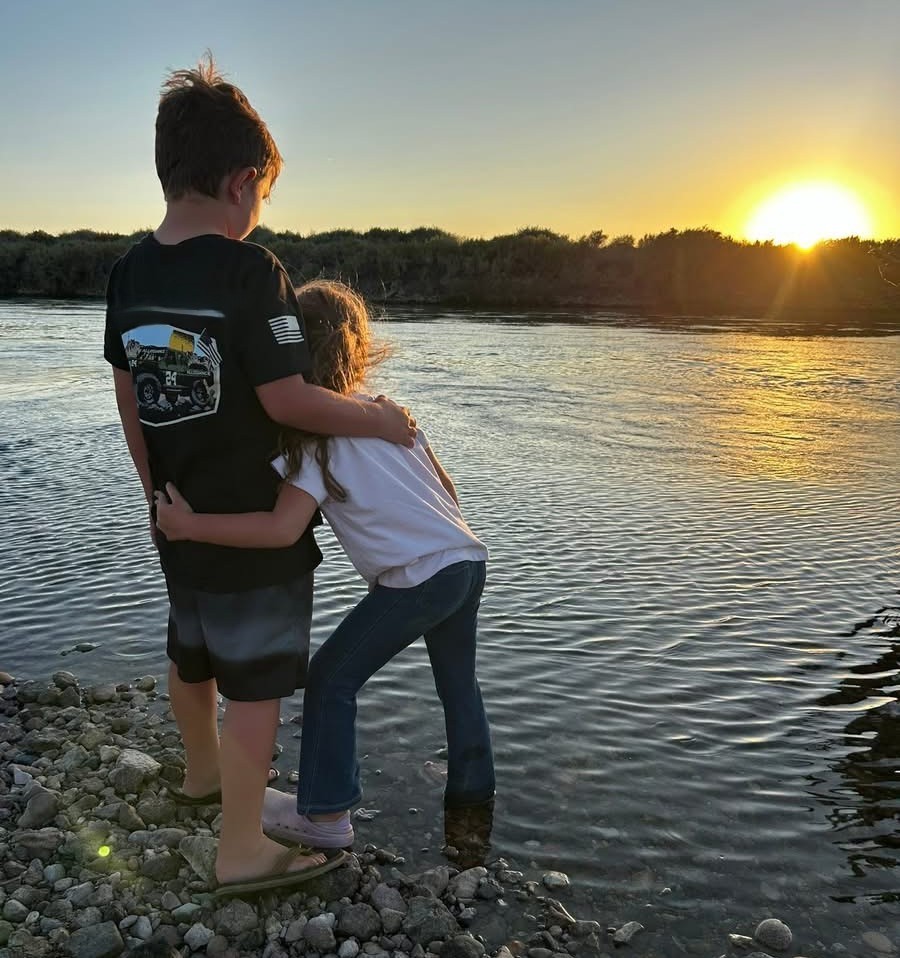
Opening photo: Maverick and Rylie Beattie, watching the sunset over the Colorado River in Sibola, AZ. Photo by their mom, Alyssa Collier. Graphic by Kazakova Maryia | Shutterstock.