








types

Just as a painting comes alive with a tiny lamp perched over its frame or a simple landscape becomes a nighttime spectacle with strategically placed spot and flood lights, illuminated water creates an intense experience for the eyes. Lighting adds depth and dimension while revealing subtle details and producing emotional responses among those who view and enjoy these scenes. The simple truth is, if we didn't light water in fountains and other watershapes, much of its visual beauty would be lost. As we discussed in "Guiding the Lights" (WaterShapes, March 2001, page 48), understanding and applying the various approaches and techniques of lighting water enables professional watershapers to operate on whole new levels. In the following pages, we'll continue that discussion with a look at what it takes to maximize the aesthetic effects of water in motion and discuss some practical issues having to do with lighting installation and safety. SOLUTIONS IN MOTION Last time, we identified the various categories of water effects, design considerations for each and the most effective of the available lighting solutions. This time we'll
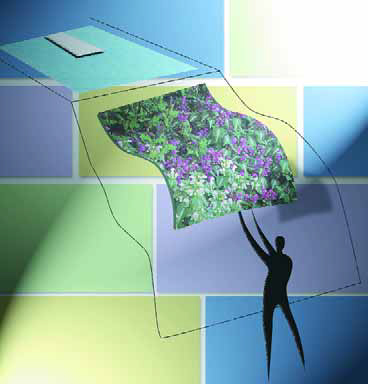
Last time, we talked about planters, terracing and a couple other techniques for stabilizing slopes and making them look great as backdrops or foregrounds for hillside or hilltop watershapes. We left for this column the important discussion of what to plant in these spaces. In making these suggestions, I'll discuss soil-binding plants and other ground covers that contribute specific desirable qualities to landscape settings. My reasoning is simple: Although sod is a great ground cover and is certainly versatile, I believe that having a broader and more decorative
Very often when I'm selecting a plant palette with a client, I'll hear the words, "I hate ferns." I'm not sure what it is about these botanical beauties that evokes such a visceral reaction from people - except maybe that they were overused in floral arrangements during the 1970s and 1980s? I'm not sure what's going on here, and if any of you know a soild reason for this dismissal, please educate me! For my purposes, ferns are one of the most versatile plants available. They typically prefer

When you think of palms, it's easy to conjure visions of Hawaii or some other tropical paradise. These graceful plants evoke a sense of serenity and thoughts of calm tropical breezes - and maybe even memories of a cool mai tai in your hand. Unfortunately for lots of us, palms thrive only in warmer climates. In the United States, for example, they generally do not grow north of the 33rd parallel, which stretches roughly from Northern California on the West Coast to South Carolina on the East Coast. This geographic factor is the main reason I haven't discussed palms before in this column. After three years, however, I figure I'm
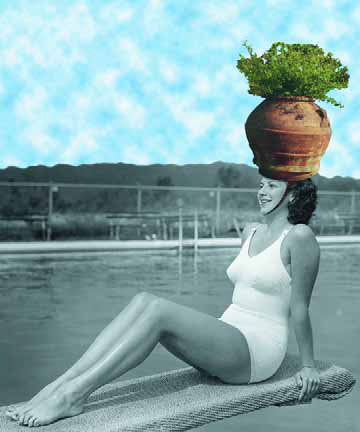
Last month, we dug into the use of containers and accessories in garden designs and discussed ways in which they add interest, depth and dimension to almost any setting. This time, we'll get more specific and look at ways in which the same containers and accessories can be adapted to fit a particular environment and used with various design styles. To do so, let's start with long, rectangular pools (15 by 40 feet), place them in the yards of clients with different desires and see how we can blend planters into several popular styles: [ ] Contemporary: If you have a very contemporary setting with no planting beds, containers can be used to

The ancient Celts transported huge slabs of stone over long distances to create religious circles at Stonehenge and Avebury. The Romans used stone to build their aqueducts. From the pyramids of Egypt to the Acropolis in Athens, from the Great Wall of China to the great castles of Europe, stone has been the raw material of choice for our greatest and most enduring structures. Through the ages, stone has been a well-used material because it is both durable and readily available. It's hard to find a town in Europe without walls constructed of local stone, and all you need do is drive through
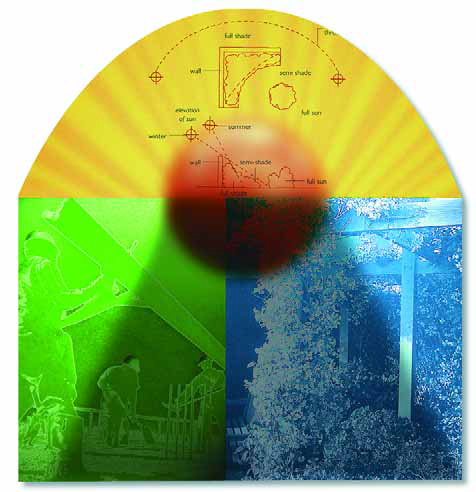
I truly enjoy including shade structures in my designs. Whether I'm working with an overhang, an arbor, a loggia, a pergola or some other structure (and, yes, they are all different), I see them as ways to create visual extensions of a house - and wonderful places to enjoy being next to the water. There is, of course, as much art and skill to designing and installing the right shade structure as there is to setting up all of the other features of a great backyard. Done well, a structure that projects out from a house will pull your eye from inside to outside while it provides relief from the sun. Similarly, freestanding shade structures

There's never been much of a tradition in this country when it comes to beautiful stonework, especially when it comes to flat stone surfaces. What you usually see is the same few stone types used over and over again in the same sorts of applications. To see a contrasting heritage, just travel in Europe and some parts of Asia, where you'll see a far greater variety of flat stone used in creative ways to create pathways, walls, decks, patios and a host of architectural features, including pilasters and finials. Of course, the Old World had a long head start on us, but even so, we've been slow in the New World to catch up with the masonry and quarrying trades as they've been practiced abroad for centuries. Fortunately, that's starting to change. My firm, Malibu Stone & Masonry of Malibu, Calif., supplies stone (flat and otherwise) to a host of contractors, landscape architects and designers. What we're seeing is a two-stage process: Professionals are surprised

It's amazing what can happen when you begin to look at the world through open eyes and with an open heart. More often than not, things that were once taken for granted or that

Whether you build fountains, streams or Olympic-size swimming pools, you need to install a pump of some kind to make these watershapes work. As fundamental and essential as pumps really are, however, it's amazing to think how casual many of us in the trade are when it comes to knowing about how they work and how their performance characteristics differ. We've all heard and used terms like "energy efficient," "high head" and "self-priming," but for the most part, the real meanings of those words get lost in the competitive marketing blizzard that surrounds these products. Without a clear understanding of how pumps are designed and how they do their job, these distinctions are no more than words on a label - and that's not the way it should be. As watershapes become ever more complex and hydraulically challenging, cutting through the hype to find out what truly makes pumps work becomes even more important: No matter how beautiful a design may be, without a properly selected and installed pump working at the heart of the system, the best work will fall short in