








types
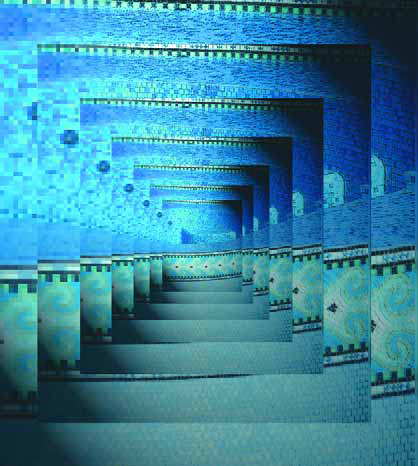
A great many wonderful things can be said about all-tile pool finishes once they're done, but you can't lose sight of the fact that that such finishes require lots of planning, are difficult to apply and, as your clients will tell you, are far from inexpensive. And by "far from inexpensive," I mean that the price tag will usually give pause even to people of great means. This is all especially true with glass tile, which is applied using different (and generally more complicated) techniques than is ceramic tile and costs proportionately more. But that cost brings with it a great and stunning beauty that
I found a new "favorite" plant last summer. It's called Dalechampia dioscorefolia, otherwise known as the Costa Rican Butterfly Vine. Its stunningly beautiful, exotic flowers were unlike those on any of the vines I typically see at nurseries and easily earned a place in my disorganized (and experimental) backyard garden. Given its unique beauty, I placed it on a trellis directly outside my bedroom window so I could see it every day and observe its progress. After a few months of growth, it was still quite floppy and had not wrapped itself around places high enough on the trellis for my liking. So one Saturday, I went out and wrestled apart many of the branches of the vine that had wrapped around themselves and set them up to reach
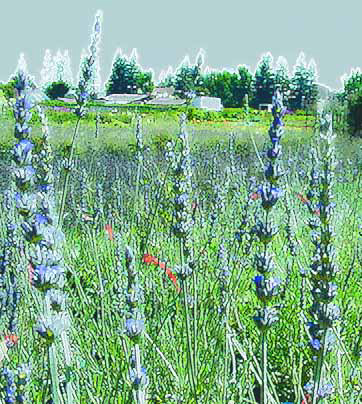
Few plants have been written about, lingered over and so passionately associated with fragrance, healing and serenity as lavender. Beyond stunning beauty of the sort seen in the vast purple fields of Provence, lavender has spread worldwide, leaving a trail of exquisite aroma and touching everything from our imaginations to our health. Some say lavender has pain-killing, antiseptic and skin-rejuvenating properties and that it's great for toning skin, fighting acne and soothing burns and cuts. This versatile plant is used as well to infuse perfumes, oils and soaps, and I know from my own experience that it makes a great marinade for lamb and adds
Nobody seems particularly thrilled by environments devoid of light. Even at times when a lack of light is welcomed - as in the desert when you want to see the stars, or on a holiday night when you want to see a fireworks display - the events are related to light in some important way. The same attitude about light comes up when we speak of landscapes. We're always talking about "brightening up" a dark corner, for example, or "adding light" at one point or another. Whether the absence of light makes us uncomfortable or its presence is simply a

From pools, spas and fountains to streams, ponds and waterparks, effective watershaping is largely about the plumbing that makes these systems work. If you see things that way, says hydraulics expert Steve Gutai, there's nothing more fundamental to success than making proper connections in the system's plumbing lines, first time, every time, and piping joints that will bear up under pressure for the long haul.

Out of all the varieties I mentioned in last month's discussion of maples, my favorite was (and still is) the variegated maple. Beyond the simply spectacular nature of that particular tree, what I love most about them is their variegated leaves. This is clearly a personal preference. In fact, I've come across many clients and friends who have a specific disdain for variegated
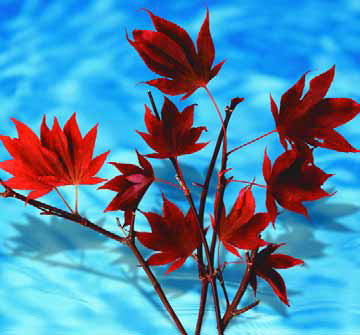
If I could point to one plant that will consistently stand out in just about any garden, it would have to be the maple. Virtually no Asian-style garden would be complete without one, and they fit beautifully into gardens of many other styles as well. I particularly like pairing maples with watershapes because of their tendency to soften the edges of typical hardscapes and the way they are reflected by the water. When placed well, a specimen or single maple can indeed be a key

It's a little too easy to lose sight of what holds the most meaning our work as watershapers - even when it's out there in plain view. In fact, if we're to be honest in assessing the palette of finish materials we use, I think most of us would have to concede that these products can become so familiar that thinking creatively about the full spectrum of their possibilities is something that often falls by the wayside. I believe we should be on guard against
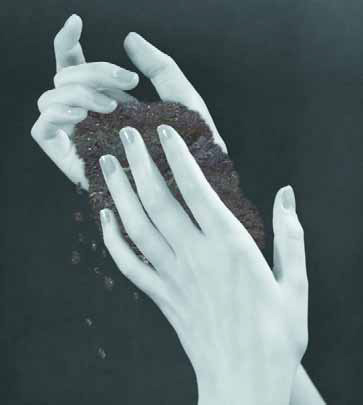
Watershapers are still fairly easily divided into two groups, one with its origins in the landscape trades, the other hailing from the pool industry. For all the distinctions that might be drawn between them, however, watershapers of all stripes have one very important thing in common: We all work with the stuff we find under our feet on the job site - the stuff we generally call dirt or soil. Dirt is the more inclusive of the two terms, and unless the contractor is working with a tricky site or faces compaction issues, it is simply what is carted away or rearranged to make room for a watershape. By contrast, soil is a blanket term covering

We live in a wonderful era of creative development in a variety of watershaping trades and are truly blessed, it seems, with an ever-expanding generation of talented artists and a sense that our most dynamic creations are yet to be built. For all of this forward momentum, however, I find myself surprised and dismayed all too often by the lack of creativity that goes into our work below the water's surface. To my eyes, pool and spa interiors in particular are simply bland and boring. I'm oppressed by six-inch waterline tile surmounting a field of