

lifestyle

If there’s one thing that almost all parties in homes have in common, it’s that people tend to congregate around food and drink in the kitchen. Almost invariably, that’s where the action is. As more and more homeowners are taking their indoor lifestyles outdoors into their backyards and landscapes, the “action” is moving outside as well, with al fresco kitchens becoming the new hub at social gatherings. This is why outdoor kitchens have grown so much in popularity in recent years, moving past being simple counters adjacent to charcoal barbecues to become, according to the American Institute of Architects, the number-one growth category in home improvement. In plying my trade in a sunny, particularly warm part of southern California, I’ve had a front-row seat in watching this trend develop – and I’ve now been designing and building these amenities for more than a quarter century. It’s reached a point where my company, The Green Scene (Northridge, Calif.), builds at least 25 outdoor kitchens every year across a range of styles and levels of complexity. Experience has taught us that the

It’s no secret that swimming pools have come a long way in recent years and are now graced with all sorts of features, functions and materials that, once rare or non-existent, have now become common and (in some cases) familiar. For all of that innovation, however, there really hasn’t been what one might call a re-imagining of the product or any fundamental reassessment of its nature. In fact, as we and certainly some prospective clients see it, there are problems with pools as they’re traditionally designed and built. For one thing, bathers with physical limitations have difficulty getting in and out of the typical pool. For another, pools take up a good bit of physical space, which is increasingly an issue as

It’s hard to pin down exactly when it happened, but at some point in the past dozen years the concept of the outdoor kitchen took off – so much so that these features have moved from “relatively unusual” to “must-have” status on very nearly every upscale residential project. That’s certainly been the case in my practice, and I hear the same thing from most other watershapers and landscape professionals I’ve talked with in recent times. I’ve already covered some books intended to help us design these spaces and select among the variety of available components and options (“Book Notes,” June 2007). This time, I’ll take a different tack by

This is almost certainly the toughest column I’ve ever written – and probably the most important. In past editorials, it hasn’t been unusual for me to share various forms of personal information, some of it about my family, some of it concerning my own health. I’ve been keenly gratified by the words of support I’ve received from colleagues and friends on those occasions, and I thank you here, one and all. This is, I fear, another of those occasions, as I

It’s amazing for me to learn that this 100th issue of WaterShapes is carrying my 80th “Book Notes” column. It’s been a wonderful and fascinating experience – and as my wife puts it, has provided a great way to rationalize my literary addiction. I remember when Eric Herman and I first discussed the idea for this column: At the time, we both wondered how long it could be sustained. After the best part of seven years, I think we’re both comfortable with the thought that it’s basically a journey without end. To mark this special occasion, I want to look back at one of the most significant of all the books I’ve ever reviewed – one that isn’t about watershaping, construction, landscape architecture or anything in any way related to our industry. That book, which I wrote about way back in February 2003, is Harvests of Joy: How the Good Life Became Great Business by Robert Mondavi (with Paul Chutkow; Harcourt Brace, 1998). I’d read it based on

I first came to St. Lucia in 1970 to work for a Canadian architectural firm based on the island. As it has turned out, I never left. The beauty of St. Lucia’s landscapes, the warmth and character of its people and the unlimited potential to create something very special here captured my imagination. It’s a Caribbean paradise one must experience personally to fully appreciate and understand. When I first encountered the property that is now home to Anse Chastanet and Jade Mountain in 1974, there was almost nothing here – a handful of small bungalows nestled in the rainforest across maybe five acres of land. Amenities included four aluminum umbrellas and four plastic lounge chairs on the sand, and there was a lady who sat at the bottom of the stairs leading to the beach. She had a cooler filled with Cokes and a bottle of local rum, enabling you to enjoy the beautiful setting and have a drink. But the occupancy rate was very low and nothing about the place beyond the setting would make
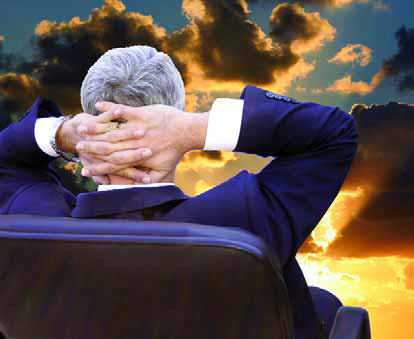
I've always believed that we should make a point of playing at least as hard as we work. My parents taught me that: They were both hardworking people who always made time for big-time fun and relaxation, and that outlook has influenced my entire approach to life. Fact is, relaxation in almost all forms is far more important than most people think - especially in our modern culture, which promotes what I see as an unbalanced view of work versus play. Most everyone in watershaping, for example, knows that

"To succeed in business or in life, I don't think you need fancy schooling or highly technical experience. What I think you need is common sense, a commitment to hard work and the courage to go your own way."-- Robert Mondavi That statement from Robert Mondavi's autobiography truly inspires me. Since I first read those words, I've become keenly aware of how this and other things he says about his career in the wine industry apply not only to

What started as a slow simmer has now come completely to a boil. Ten years ago, precious few of our clients had little or no interest in setting up outdoor cooking areas to go along with their pools, spas and waterfeatures. That's certainly not the case today, when fully 90% of our clients want us to set up some sort of kitchen amenity as part of their deck and patio areas. You don't have to be a marketing genius to see what's happening: It's great fun to
I love the fact that more and more people I talk to are referring to the bodies of water they create as works of art. At their best, watershapes do indeed possess all the aesthetic potential of